Harsha Wijayawardhana’s work has grown through sustained partnerships
in computing, Sinhala language technology, Unicode, Internet
infrastructure, IDNs, Universal Acceptance, numeration and
public-interest technology. This collection also brings together his
confirmed IGF and related Internet-governance addresses.
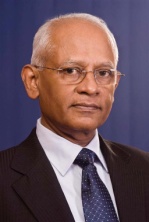
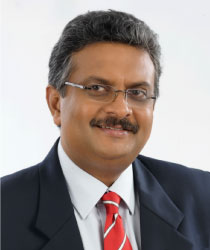
Prof. V. K. Samaranayake. Photograph preserved from the ICT History
of Sri Lanka project.
Computing · Internet · ICT for development
Prof. V. K. Samaranayake
Mentorship and institution-building
Prof. Samaranayake’s mentorship shaped much of Harsha’s
public-interest computing work. Their association included election
computerisation, the Commissioner of Elections intranet, the
Kothmale Internet Community Radio initiative, the Virtual Village
programme, Sinhala computing and the work that developed around UCSC
and its Software Development Unit.
Harsha contributed the chapter
Kothmale Internet Program to Virtual Village: Recollection of
nine years of ICT4D in Sri Lanka
to Partners in Progress, the 2007 felicitation volume
honouring Prof. Samaranayake. The chapter records the evolution of
two landmark rural ICT initiatives and preserves part of their
shared institutional history.
Harsha collaborated with veteran artist and cartoonist Winnie
Hettigoda during the formative work on Sinhala Unicode fonts. Winnie
designed new Sinhala letterforms, while Harsha developed the shaping
and rendering rules needed to make those forms work correctly with
Unicode-aware rendering engines. Their collaboration connected
artistic judgement with the technical behaviour required for vowels,
conjuncts, rakaransaya, yansaya and touching letters.
Winnie also designed the original Sinhala Unicode logo used by
fonts.lk. The design used his newly developed Sinhala font
shapes and colours drawn from the Sri Lankan flag. On the early
fonts.lk website, the logo appeared against a deliberately
plain white background, becoming a visual signature for the effort
to make standards-compliant Sinhala type freely available to the
public.
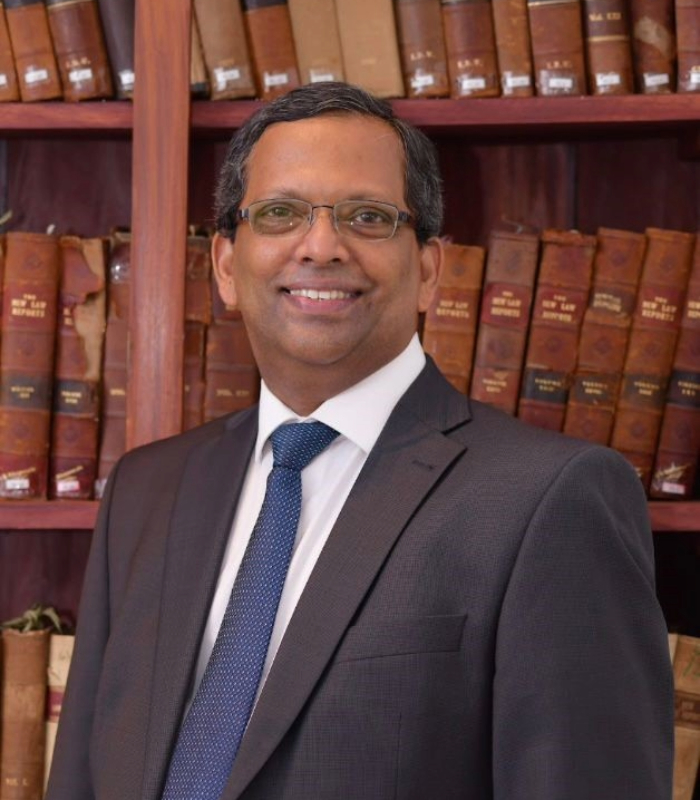
Prof. P. W. Epasinghe. Photograph preserved from the ICT History of
Sri Lanka project.
ICT policy · Local-language computing
Prof. P. W. Epasinghe
National ICT and Sinhala-language initiatives
Harsha worked in the wider national ICT and local-language ecosystem
in which Prof. P. W. Epasinghe played a leading role. Prof.
Epasinghe, then Chairman of ICTA, participated in the 2009 launch of
Harsha’s book Numerations in the Sinhala Language, a work
bringing historical Sinhala number systems into contemporary
technical and public discussion.
The partnership represents a shared concern with making information
technology meaningful and accessible in Sri Lanka’s own languages,
while connecting institutional policy, technical standards and
public scholarship.
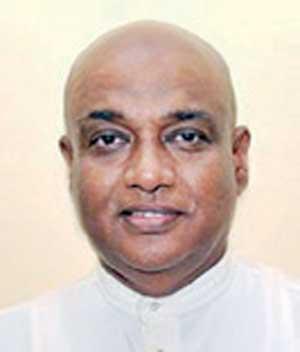
Prof. J. B. Disanayake. Photograph from the professor’s official
website.
Sinhala language · Unicode · Numeration
Prof. J. B. Disanayake
Language scholarship joined with digital standards
Harsha and Prof. J. B. Disanayake collaborated at the meeting point
of Sinhala scholarship and computing. They were among the
contributors to
An Introduction to Unicode for Sinhala Characters (2003),
alongside Prof. V. K. Samaranayake, S. T. Nandasara and A. R.
Weerasinghe.
Prof. Disanayake also reviewed
Numerations in the Sinhala Language and discussed the
significance of Harsha’s evidence concerning a historical Sinhala
zero. Their association helped connect linguistic expertise with the
exact character, writing-system and historical questions required
for Sinhala to function reliably in digital environments.
Prof. Nalin de Silva, 2006. Photograph preserved from Wikimedia
Commons.
Mathematics · History of ideas · Public education
Prof. Nalin de Silva
A dialogue on the Sinhala zero
Harsha’s association with Prof. Nalin de Silva developed into a
public intellectual dialogue on Sinhala numeration, zero and the
history of mathematical ideas. Their Sinhala-language online lecture
brought Harsha’s documentary and technical research before a wider
audience.
The programme was introduced by Nalaka Jayasena and also involved
Mr. Piyadasa. It gave space to examine the Sinhala zero not simply
as an isolated symbol, but in relation to indigenous notation,
language, knowledge traditions and the interpretation of historical
evidence.
Prof. Eric Hamilton Karunanayake. Photograph from The World Academy
of Sciences (TWAS).
Molecular biology · Networks · Bioinformatics
Prof. Eric Karunanayake
Building the digital foundations for molecular biology
Harsha’s close association with Prof. Eric Hamilton Karunanayake
extended for roughly three decades. It began in the latter part of
1996 when Prof. Samaranayake sent Harsha to help connect the Apple
Macintosh used for DNA sequencing at the Institute of Biochemistry,
Molecular Biology and Biotechnology (IBMBB) to the Internet.
The collaboration expanded into the design of high-performance
computing facilities for DNA sequencing, the purchase and deployment
of specialist computers, and a fibre network with VLANs. Harsha
helped establish a fibre link between UCSC and IBMBB, designed the
institute’s first website, and his Software Development Unit team
designed the IBMBB crest incorporating the DNA double helix. He also
worked with Prof. Eric and Prof. Ruvan Weerasinghe on the concept of
a joint MSc in Bioinformatics.
The relationship joined Harsha’s own background in biochemistry with
networking and software engineering, helping create practical
infrastructure for emerging computational biology in Sri Lanka.
Prof. Gihan Dias · Internet infrastructure, .LK, Sinhala computing
and standards.
Internet infrastructure · Unicode · IDNs
Prof. Gihan Dias
From LEARN and Sinhala computing to multilingual Internet
infrastructure
Harsha and Prof. Gihan Dias worked within Sri Lanka’s formative
Internet community and later across the Local Language Working
Group, ICTA, LK Domain Registry, standards work and Internet Society
activities. Together with Dr. Ruvan Weerasinghe, they led practical
Sinhala Unicode implementation work spanning fonts, keyboards,
rendering, storage and adoption.
Their documented technical work includes SLS 1134, the 2003 Sinhala
conjunct-rendering solution based on ZWJ, Sinhala and Tamil
internationalized domain names, and research on Sinhala numerals. In
January 2008, Prof. Dias formally transmitted Harsha’s interim
research on archaic Sinhala numerals to the Unicode Technical
Committee on behalf of ICTA. They also worked through LK Domain
Registry and the Sri Lanka Internet community on .lk, .ලංකා,
.இலங்கை, Universal Acceptance and Internet governance.
Dr. Ruvan Weerasinghe · Computational linguistics, Sinhala/Tamil NLP
and Internet governance. ICT History profile →
NLP · OCR · IDN label rules
Dr. Ruvan Weerasinghe
Language engineering from Unicode implementation to AI research
Harsha and Dr. Ruvan Weerasinghe collaborated on Sinhala Unicode
implementation, language tools and the Pan Localization programme.
Their work connected character encoding and rendering with corpora,
natural-language processing, localized applications and public
deployment.
They co-authored work on implementing Internet domain names in
Sinhala with Asanka Wasala and Chamila Liyanage. Harsha and Dr.
Weerasinghe later co-chaired the ICANN Sinhala Generation Panel that
prepared the Sinhala Root Zone Label Generation Rules. They also
co-authored the 2020 ICTer paper
Deep Learning Based Sinhala Optical Character Recognition
with Isuri Anuradha and Chamila Liyanage, and worked together
through Theekshana, Universal Acceptance programmes and the Internet
Society community.
Dr. S. T. Nandasara · Sinhala encoding, digital media and rural
Internet research. Published portrait source →
Encoding · Publications · Rural Internet
Dr. S. T. Nandasara
Standards, Sinhala computing and rural Internet research
Harsha’s collaboration with Dr. S. T. Nandasara spans early Sinhala
encoding, Internet access and public education. They were
co-authors, with Prof. V. K. Samaranayake and colleagues, of rural
Internet papers including
Difficulties in providing Internet facilities to rural
communities in the third world
(1999) and
Benefits of Internet to Rural Communities: a Sri Lankan
initiative based on inexpensive solutions
(2001).
They also co-authored
An Introduction to Unicode for Sinhala Characters (2003).
Harsha later adapted Dr. Nandasara’s Sarasavi glyphs into a Unicode
font during the implementation period.
Prof. Gihan Wickramanayake · eLearning, learning-management systems
and Telecentre.org capacity-building.
eLearning · LMS · Telecentre.org Academy
Prof. Gihan Wickramanayake
Building eLearning platforms and international telecentre education
Harsha and Prof. Gihan Wickramanayake maintained a close
collaboration in eLearning and the Telecentre.org Academy programme.
Their work linked UCSC’s experience in online education with the
practical requirements of an international learning platform serving
telecentre practitioners and communities.
They collaborated on the Telecentre.org learning-management-system
project, curriculum and capacity-building activities. Prof.
Wickramanayake’s academic leadership in online learning complemented
Harsha’s responsibility for implementation, hosting, workflow
systems, localization and coordination through Theekshana and the
UCSC technology ecosystem.
Digital government · National institutions · ICT4D
Public-sector and community-development collaborators
Senior public servants and development leaders with whom Harsha worked on government information, telecommunications, Presidential Secretariat infrastructure, passport-office systems and Sarvodaya telecentres.
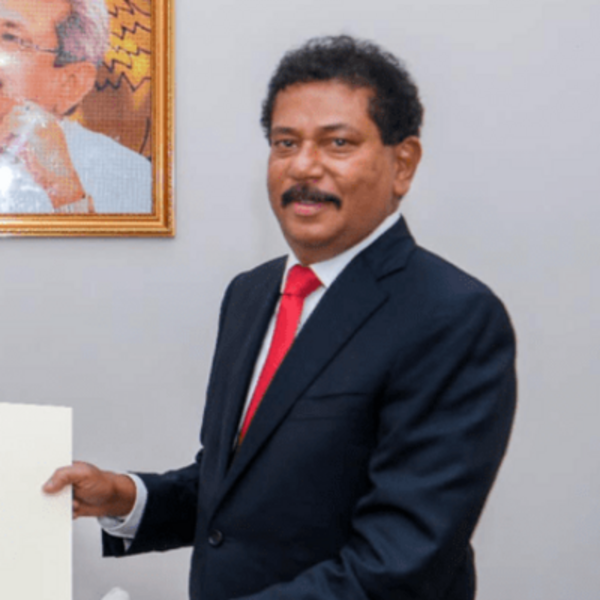
Mr. Anusha Palpita · Government Information Department and TRCSL. Portrait derived from an official Ministry of Mass Media photograph.
news.lk · Government information · Telecommunications
Mr. Anusha Palpita
Digital government communication and telecommunications administration
Harsha worked with Mr. Anusha Palpita while he served as Director General of the Department of Government Information, including the development and operation of news.lk and the Department’s LAN and WAN. Harsha later worked with him again when Mr. Palpita served as Director General of the Telecommunications Regulatory Commission of Sri Lanka.
As ICT Consultant to TRCSL, Harsha played a significant role in telecommunications and Internet-related technical work, connecting his earlier government-web experience with national regulatory and digital-infrastructure responsibilities.
Harsha served under Mr. Lalith Weeratunga during his work as ICT Consultant to the Presidential Secretariat. From 2010 to 2015, Harsha refurbished and restructured the Secretariat’s network, including the Temple Trees office complex, introduced new firewall arrangements, trained ICT staff and helped reorganise the ICT Division.
The collaboration also intersected with Sri Lanka’s wider Internet-development programme. Mr. Weeratunga opened INET Colombo 2011, organised while Harsha served as founding President of the Internet Society Sri Lanka Chapter.
Early passport-office computerisation and later government service
Harsha worked with Mr. Gamini Senarath at the Department of Immigration and Emigration during the early computerisation of passport issuance. Harsha served from 1997 to 2002 as the Department’s first ICT Consultant appointed through CINTEC and joined the expert effort that resolved critical performance problems in the newly acquired automated passport-issuance system.
The professional association continued through later work connected with the President’s Office. Mr. Senarath’s own public-service record included senior responsibilities at Immigration and Emigration before his later roles at the Presidential Secretariat and Prime Minister’s Office.
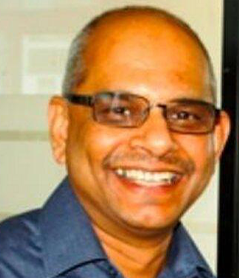
Dr. Harsha Liyanage · Founder of Sarvodaya-Fusion and ICT4D practitioner. Portrait published by Sarvodaya-Fusion.
Sarvodaya · Telecentres · Virtual Village
Dr. Harsha Liyanage
Connecting rural communities through telecentres and wireless access
Prof. V. K. Samaranayake introduced Harsha to Dr. Harsha Liyanage, then responsible for Sarvodaya’s digital programme, when Sarvodaya needed specialist help with early telecentre connectivity. Harsha subsequently helped connect several Sarvodaya telecentres, supported the design of the Mobile ICT Bus and developed practical methods for dial-up connections over noisy rural telephone lines.
Dr. Liyanage and Harsha later designed the IDRC-supported Virtual Village project. Harsha led its technical work through UCSC and Theekshana, establishing wireless hotspots in Gampaha and Hatton and studying how terrain, foliage and weather affected rural Wi-Fi. Their collaboration linked Sarvodaya’s community-development practice with applied network engineering.
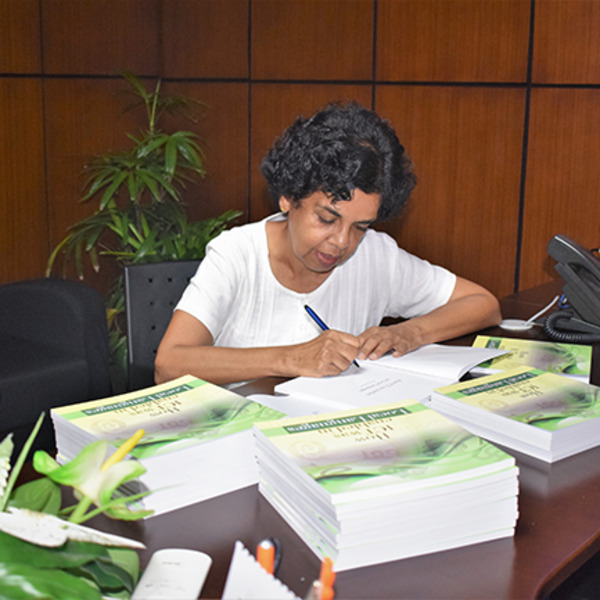
Ms. Aruni Goonetilleke · former Senior Programme Manager, ICTA. Photograph from the LK Domain Registry’s 2020 local-language ICT book event.
CINTEC era · ICTA · Sinhala and Tamil computing
Ms. Aruni Goonetilleke
Long-term collaboration in local-language computing
Harsha’s professional association with Aruni Goonetilleke reaches back to the CINTEC period and continued through ICTA’s local-language programme. As ICTA’s Programme Manager for Information Infrastructure, she coordinated initiatives that brought researchers, font designers, standards specialists and public institutions together to make Sinhala and Tamil usable in everyday computing.
Aruni coordinated the Unicode-font developer training at UCSC and edited Harsha’s 2009 book Numerations in the Sinhala Language. Her later book, How ICT Was Enabled in Local Languages, records the wider institutional and individual effort behind Sinhala and Tamil computing through 2014.
Senior Prof. Sampath Amaratunge · Deputy President and Deputy CEO, CINEC Campus. Official CINEC portrait.
Ananda College · UGC · CINEC Campus · CIBA
Senior Prof. Sampath Amaratunge
A lifelong association extending into higher education and institutional development
Harsha and Sampath Amaratunge entered Ananda College together as six-year-olds in 1970. That childhood connection later became a close professional association through higher-education work, including Harsha’s work with the University Grants Commission.
Prof. Amaratunge is a former Chairman of the UGC and former Vice-Chancellor of the University of Sri Jayewardenepura. He now serves as Deputy President and Deputy CEO of CINEC Campus, where Harsha serves as ICT Consultant. Their collaboration also extends to CIBA, the higher-education initiative associated with Sri Dalada Maligawa.
Prof. Kamal Waleboda. Portrait from the University of Colombo
Journalism Unit.
Radio · Development communication · Digital culture
Prof. Kamal Waleboda
Nineteen years of radio presentation and the UCSC Digital Thorana
Harsha worked with Prof. Kamal Waleboda on radio programmes for
almost nineteen years. Prof. Waleboda served as the compere of
Internet Sampath Bhavithaya, while Harsha contributed as an
ICT resource person, helping explain Internet resources and
computing to Sinhala-speaking audiences through public-service
broadcasting.
Their collaboration also produced the UCSC Digital Thorana based on
the Chulla Setti Jathakaya. The official UCSC record states
that Prof. Waleboda composed the viridu, while Harsha
conceptualized and managed the project as consultant and Head of the
UCSC Software Development Unit. The project joined traditional
storytelling, poetry, computer graphics and large-screen digital
presentation.
Dr. Basheerhamad “Shaddy” Shadrach. Portrait published by the UNESCO
Institute for Lifelong Learning.
Telecentres · eLearning · International capacity-building
Dr. Basheerhamad “Shaddy” Shadrach
Building the Telecentre.org Academy and its multilingual learning
platform
Harsha worked closely with Dr. Basheerhamad Shadrach—widely known as
“Shaddy”—through Telecentre.org and the Telecentre.org Academy.
Harsha was a founding member of the steering committee of
Telecentre.org Academy Sri Lanka, contributed to the drafting of
curricula for the Global Telecentre.org Academy and advised on the
selection of its eLearning platform.
In June 2010, Theekshana and Telecentre.org formalized their
collaboration. Harsha led the project to host and maintain the
Academy’s learning management system, support its workflow-based
student information system and localize its interface and course
content. Theekshana conducted an international LMS workshop with
participants from across Asia and helped coordinate translation of
the first twelve courses; Harsha was also among the course authors.
Jayantha Fernando. Portrait published by the Council of Europe’s
Cybercrime Programme Office.
Internet governance · ICT law · ISOC · ICANN
Jayantha Fernando
Internet-community institution building, policy and multilingual
access
Harsha and Jayantha Fernando collaborated across Sri Lanka’s
Internet community, ICTA, LK Domain Registry, Internet Society and
ICANN-related work. When the Sri Lanka Internet community was
organizing an Internet Society chapter, Jayantha encouraged Harsha
to bring the community together, guided him in drafting the
chapter’s Articles of Association and helped establish the
connection with the global Internet Society. Harsha became the
chapter’s founding President.
Their later work connected technical implementation with law and
public policy. They worked within the national ecosystem supporting
Sinhala and Tamil computing, Internet governance and the .LK Domain
Registry. In December 2017 they jointly participated in the launch
of the Sinhala Generation Panel: Harsha as its Co-Chair and Jayantha
as ICTA’s Program Director and Legal Advisor. They were also
contributors to the wider story documented in
How ICT Was Enabled in Local Languages.
South Asian language technology and an inclusive multilingual
Internet
Harsha worked with Prof. Sarmad Hussain through the regional Pan
Localization initiative, which brought together South Asian teams
working on scripts, fonts, keyboards, corpora, NLP and localized
applications. Prof. Hussain directed the regional programme while
Harsha contributed from the University of Colombo School of
Computing and Sri Lanka’s local-language technical community.
Their later work converged through ICANN’s IDN and Universal
Acceptance programmes. Prof. Hussain, Champika Wijayatunga and
Harsha were the principal resource persons at the November 2022
ICANN workshop in Sri Lanka, linking regional script expertise with
practical UA and Email Address Internationalization
capacity-building.
Advancing a multilingual and universally accessible Internet
Harsha collaborated with Champika Wijayatunga through ICANN’s Universal Acceptance, internationalized domain name and regional capacity-building work. Together with Prof. Sarmad Hussain, they served as principal resource persons at the November 2022 ICANN workshop in Sri Lanka, connecting global technical policy with practical local-language implementation.
The collaboration complemented Harsha’s Sinhala Generation Panel, Root Zone Label Generation Rules and Universal Acceptance work by bringing ICANN’s regional technical expertise into Sri Lankan workshops and professional communities.
Prof. Damitha D. Karunaratna · University of Colombo School of Computing and Chairman, Theekshana R&D.
UCSC · Theekshana R&D · eLearning and applied research
Prof. Damitha D. Karunaratna
Academic and institutional collaboration across UCSC and Theekshana
Harsha’s collaboration with Prof. Damitha Karunaratna grew through the University of Colombo School of Computing and continued through Theekshana R&D, connecting university expertise with public-interest software, eLearning, research and professional capacity building.
Prof. Karunaratna’s work at UCSC includes eLearning, databases, knowledge systems and academic supervision. He now serves as Chairman of Theekshana R&D, where Harsha serves as COO/CTO, continuing a shared institutional commitment to translate university research and computing expertise into nationally useful systems.
Retired DIG Chandra Nimal Wakishta · President, All Ceylon Buddhist Congress. Portrait published with his 2021 ACBC leadership profile.
Buddhist Congress · Technology and public service
Retired DIG Chandra Nimal Wakishta
Institutional leadership and nationally important Buddhist service
Harsha worked with Mr. Chandra Nimal Wakishta through the All Ceylon Buddhist Congress, where Harsha served on the Buddhist Rights Commission and later chaired the Technology Committee. Their collaboration connected administration, technology and the Congress’s national responsibilities.
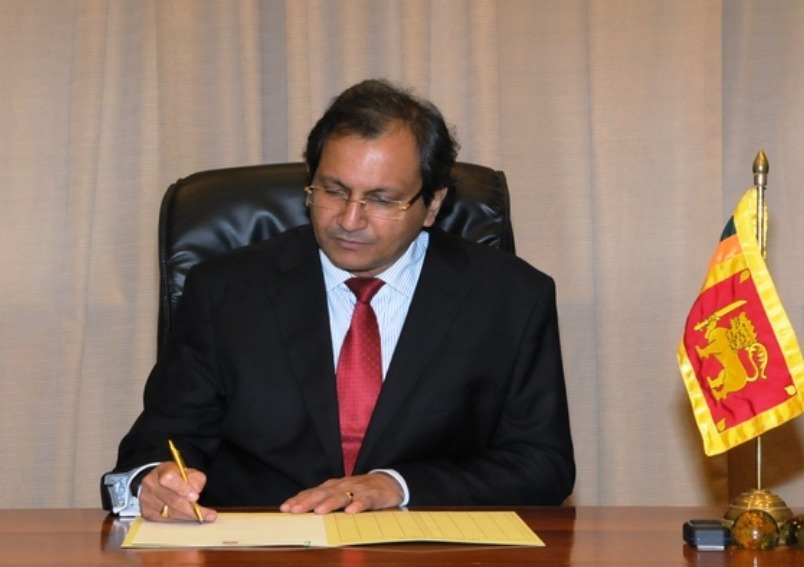
Ambassador Ravinatha Aryasinha · diplomat and former Foreign Secretary. Official Foreign Ministry photograph.
Ananda College · Foreign Ministry · Twenty-year collaboration
Ambassador Ravinatha Aryasinha
From debating mentor to architect of digital public diplomacy
Four years senior to Harsha at Ananda College, Ravinatha Aryasinha helped train him in debating as a senior prefect distinguished in both Sinhala and English. Years later, as Acting Director of the Foreign Ministry’s Publicity Division, Aryasinha asked Harsha to replace the Ministry’s single Lanka Internet portal page with a proper website. Their collaboration grew to include formin.gov.lk, the Ministry LAN/WAN, a searchable internal repository and document-management system, compilation of the Child Soldier book, and later diplomatic-web initiatives over more than twenty years.
ICANN participation, working groups and contributions
A separate chronological record begins with Harsha’s remote
presentation to ICANN46 Beijing, followed by the Sinhala Generation
Panel, RZ-LGR, Universal Acceptance, EAI and GNSO policy work.
Early Internet streaming is documented separately:
the Sri Maha Bodhi webcast associated with Sarvodaya’s Peace Samadhi
Day in Anuradhapura on 15 March 2002.
Confirmed records are separated from related Internet Society and INET
addresses so that an Internet-governance speech is not incorrectly
labelled as an IGF appearance.
IGF Sri Lanka · September 2026
One Internet, Many Languages
AI, IDNs, Universal Acceptance, Universal Access and
Multilingualism.
Discussion paper prepared for an IGF Sri Lanka 2026 panel. It argues
that AI should strengthen the universality of the Internet, extends
UA testing to AI agents, and proposes a Global South research agenda
and multilingual AI interoperability checklist.
A preserved Internet Society address on widening the benefits of ICT
and developing Sri Lanka’s Internet community. This is an INET
speech, retained here as part of the wider Internet-governance
record rather than described as a UN IGF session.
Harsha speaks as President of the Internet Society Sri Lanka Chapter
about participation in the global Internet community and the role of
the local chapter.
Across ICANN, IDN, UA, Unicode and IGF work, Harsha’s consistent
position is that meaningful Internet access requires languages and
scripts to work across identifiers, email, applications, AI systems
and autonomous agents—not merely physical connectivity.
Public service · Buddhist institutions · National commissions
Buddhist Congress and commission service
Harsha’s public service also extended beyond computing institutions
into Buddhist affairs, language policy, standards and national
advisory bodies.
All Ceylon Buddhist Congress · 2018–2021
Commissioner, Buddhist Rights Commission
Harsha served as a Buddhist Commissioner on the Buddhist Rights
Commission appointed by the All Ceylon Buddhist Congress. His
participation brought experience in public digital infrastructure,
language technology, information access and institutional systems to
the Commission’s work.
All Ceylon Buddhist Congress · 2021–present
Chairman, Technology Committee
As Chairman of the Congress’s Technology Committee, Harsha has
supported the responsible use of digital technology for
communication, preservation, administration and wider public access
to Buddhist knowledge and institutional activities.
Language and standards
National advisory and standards service
His related public appointments include the Advisory Council of the
Sinhala Dictionary Compilation Institute, the ICT Sectoral Committee
of the Sri Lanka Standards Institution, ICTA’s Local Language
Working Group, and international standards work in ISO/IEC JTC 1/SC
2/WG 2.
National digital systems
Service through boards, committees and commissions
Across the Election Commissioner’s systems, the National Broadband
Consultative Committee, the National IPv6 Committee, LGII, the Bank
of Ceylon and the Road Development Authority, Harsha repeatedly
combined technical leadership with public institutional service.
Detailed project histories
Systems built for national public service
Long-form accounts preserve the circumstances, technical work,
collaborators and public impact behind major projects.